Tell us about the job
Takes about a minute. No obligation.
A boiler repair in Stephens County starts with what the system has been asked to do and how long it has been doing it. 43 severe weather events were recorded in Stephens County, Georgia between 2015 and 2024. At that rate, severe weather lands here but does not define the operating life of every system. A contractor looking at a failed heat exchanger or a seized circulator pump is going to find that deferred maintenance or a component past its service life drove the problem. The weather is real; it is rarely the answer a diagnosis lands on.
Pipes, valves, and heat exchangers in a boiler get opened and inspected, and what a contractor finds there decides the rest of the job. Half the homes in Stephens County, Georgia were built in 1983 or earlier (2020-2024 ACS 5-year). That puts a share of the county's boilers in territory where common replacement parts have aged out of regular supply chains, and a contractor has to confirm availability before quoting a repair rather than after. If a key component is discontinued, the scope shifts from repair to replacement, and the homeowner is deciding something different than they walked in expecting.
The Parts of a Boiler a Contractor Checks First
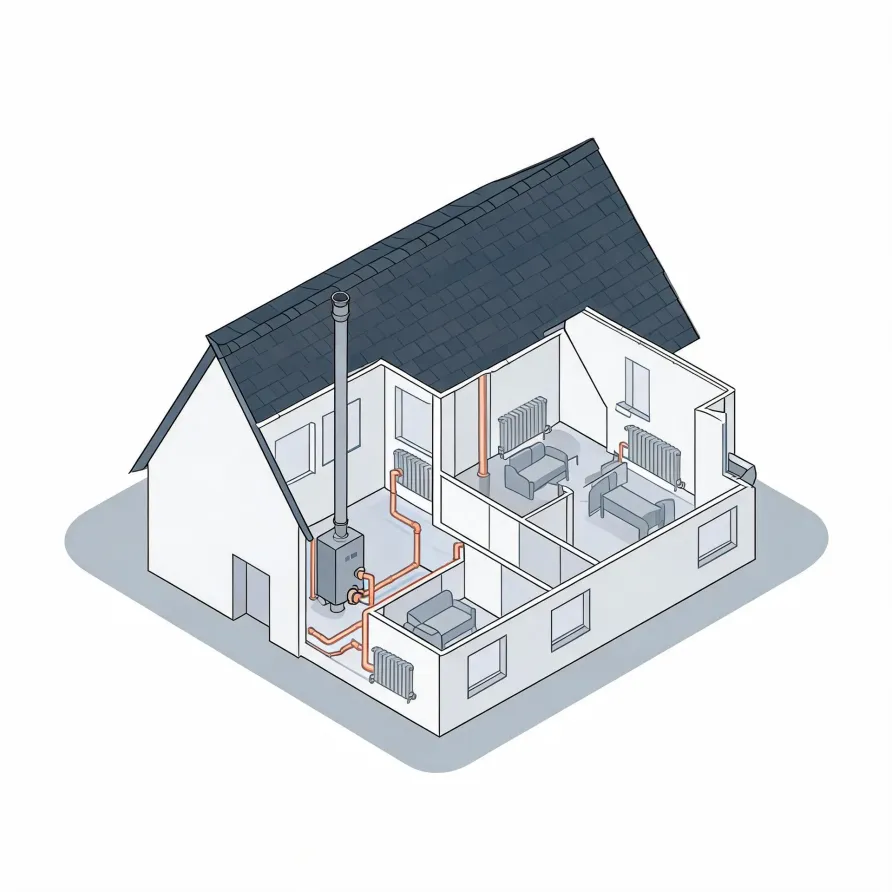
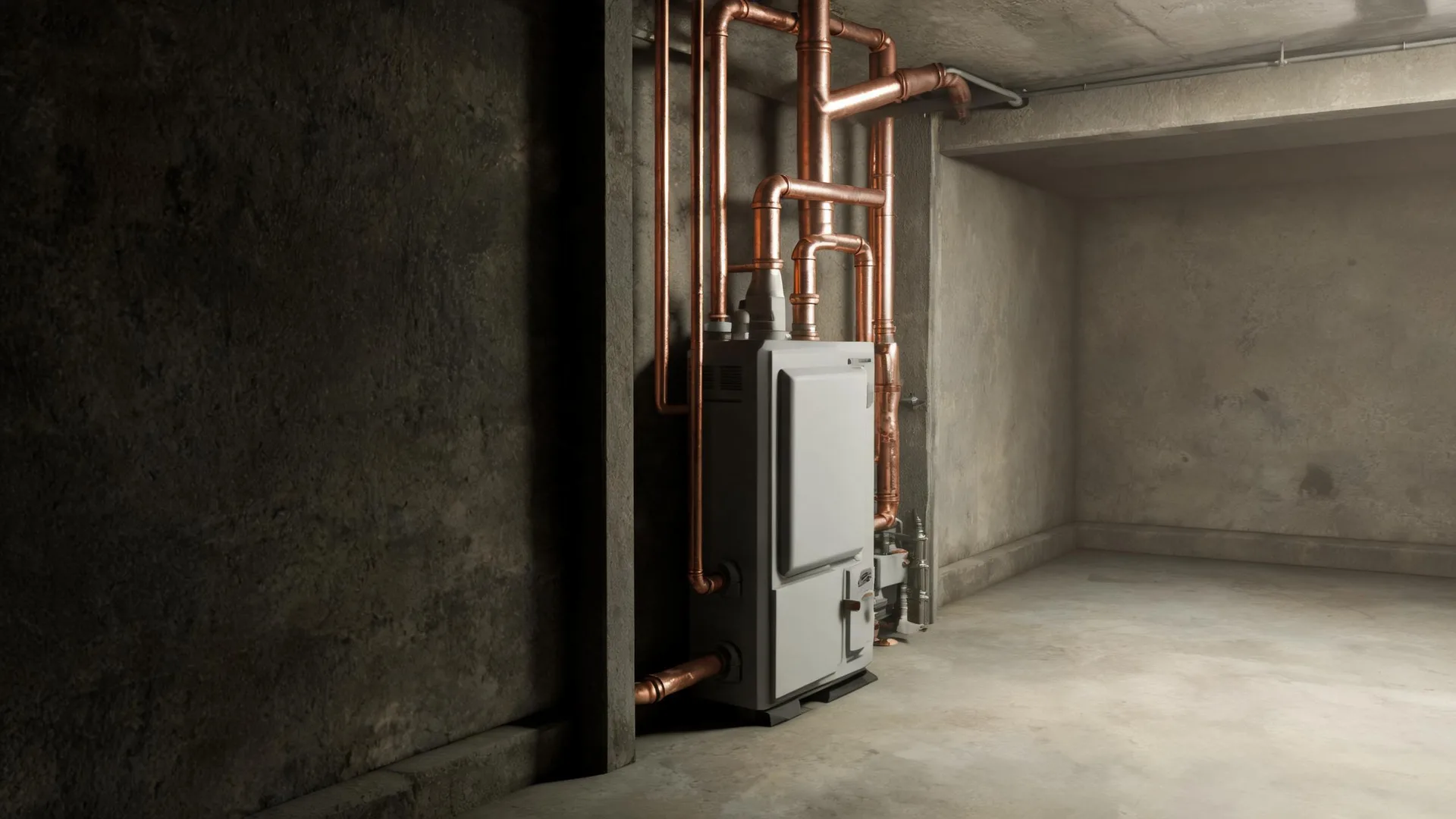
The boiler itself is the core of the system. It sits in a utility room, basement, or mechanical closet and heats water that then moves through the rest of the house. When heat stops reaching a room, or stops reaching any room, the boiler is where a contractor starts. The heat exchanger and the burner assembly inside it are the usual first suspects.
From the boiler, pipes carry hot water to radiators or radiant floor loops throughout the house, and a circulator pump keeps that water moving. The expansion tank, pressure relief valve, and controls sit close to the boiler itself. Each of these can be the source of a problem, and a contractor works through them in order.
The drawing shows a typical boiler system layout, and a licensed contractor determines which components apply to your specific installation.
Get matched in Stephens CountyStephens County, by the numbers
43 severe weather events were recorded in Stephens County, Georgia between 2015 and 2024.
NOAA National Centers for Environmental Information, Storm Events Database, bulk CSV export, events 2015-01-01 through 2024-12-31.Half the homes in Stephens County, Georgia were built in 1983 or earlier (2020-2024 ACS 5-year).
U.S. Census Bureau, 2020-2024 American Community Survey 5-Year EstimatesStephens County, Georgia holds 12,354 housing units (2020-2024 ACS 5-year).
U.S. Census Bureau, 2020-2024 American Community Survey 5-Year EstimatesOwners occupy 73.6% of the occupied homes in Stephens County, Georgia (2020-2024 ACS 5-year).
U.S. Census Bureau, 2020-2024 American Community Survey 5-Year EstimatesSevere Weather Events in Stephens County
Weather puts hours on heating equipment. Every storm cycle that pushes temperatures to extremes adds stress to a boiler, and that stress shows up as wear, breakdowns, and repair calls that are specific to what this area actually sees.
43 severe weather events, 2015–2024. Source: NOAA National Centers for Environmental Information, Storm Events Database.