Tell us about the job
Takes about a minute. No obligation.
A boiler failing in Pulaski County is most likely failing because of how old it is or how it was put in, not because of what the weather has thrown at it. 21 severe weather events were recorded in Pulaski County, Georgia between 2015 and 2024. At that rate, severe weather is an event in this county, not a steady operating condition, so a contractor arriving at a repair call cannot point to storm load as a default explanation. What they check first are the heat exchanger, the controls, and the condition of seals and connections, because those are what time and a poor original install degrade. Weather becomes a factor only if the inspection turns up something specific that points to it.
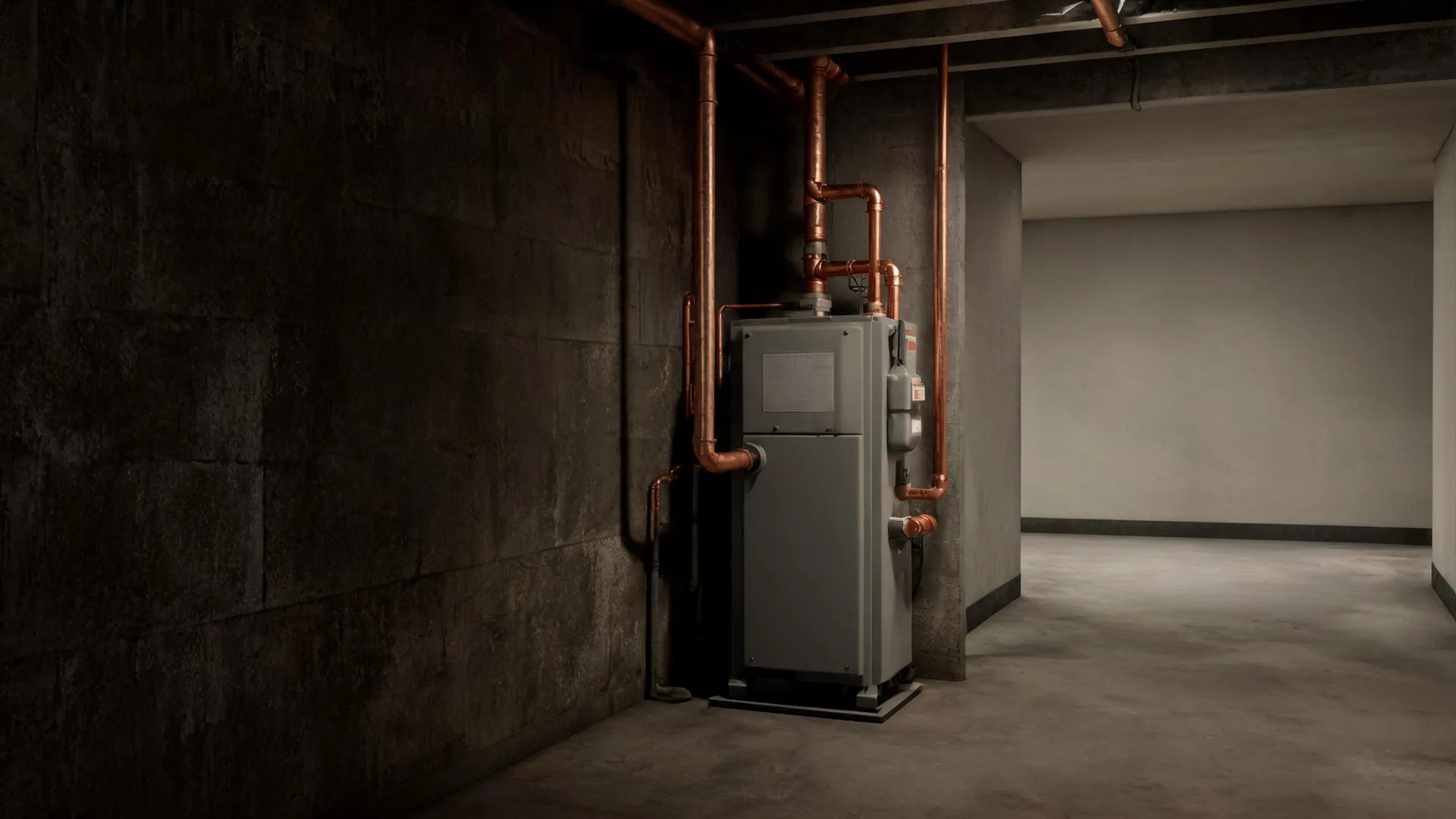
Boilers fitted into homes when much of this county's housing was new were matched to supply chains that have since contracted. Half the homes in Pulaski County, Georgia were built in 1984 or earlier (2020-2024 ACS 5-year). When a contractor opens a boiler of that vintage, the question that shapes the job is whether the heat exchanger section, the pressure relief assembly, or the circulator is still in active production. If a part is obsolete, the repair scope changes before any other variable does. A contractor working here finds that answer inside the unit, not from the address.
The Parts of a Boiler a Contractor Checks First
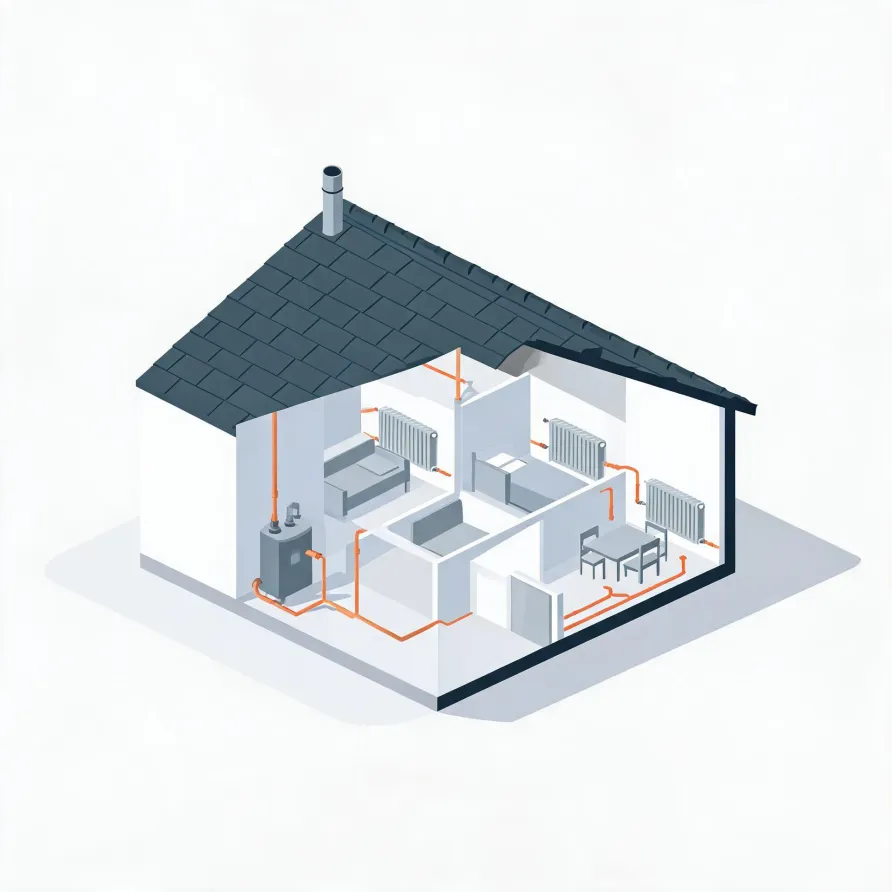
The boiler itself sits in a basement, utility room, or mechanical closet and is the piece a contractor goes to first. It heats water and pushes it through the system. When heat stops reaching a room or stops coming at all, the burner assembly, heat exchanger, or pressure vessel is usually where the fault lives.
From the boiler, pipes carry hot water to radiators or radiant panels positioned throughout the living space, and a circulator pump drives that flow. The expansion tank, typically mounted near the boiler, absorbs pressure changes as water heats and cools. A failing pump or a waterlogged expansion tank will show up as uneven heat or pressure problems before anything else.
The drawing shows a general layout of these components, and a licensed contractor determines which parts apply and what condition they are in for your specific house.
Get matched in Pulaski CountyPulaski County, by the numbers
21 severe weather events were recorded in Pulaski County, Georgia between 2015 and 2024.
NOAA National Centers for Environmental Information, Storm Events Database, bulk CSV export, events 2015-01-01 through 2024-12-31.Half the homes in Pulaski County, Georgia were built in 1984 or earlier (2020-2024 ACS 5-year).
U.S. Census Bureau, 2020-2024 American Community Survey 5-Year EstimatesPulaski County, Georgia holds 4,583 housing units (2020-2024 ACS 5-year).
U.S. Census Bureau, 2020-2024 American Community Survey 5-Year EstimatesOwners occupy 70.8% of the occupied homes in Pulaski County, Georgia (2020-2024 ACS 5-year).
U.S. Census Bureau, 2020-2024 American Community Survey 5-Year Estimates