Tell us about the job
Takes about a minute. No obligation.
A contractor quoting a boiler installation in Hancock County is not working around a punishing weather history. 26 severe weather events were recorded in Hancock County, Georgia between 2015 and 2024. At that rate, severe weather is an occasional event here, not a standing pressure on equipment, which means a system that has broken down almost certainly broke down from age, poor original sizing, or deferred maintenance. That shapes what a contractor has to establish before specifying a replacement: the existing unit's history and the heat load of the structure, not storm wear.
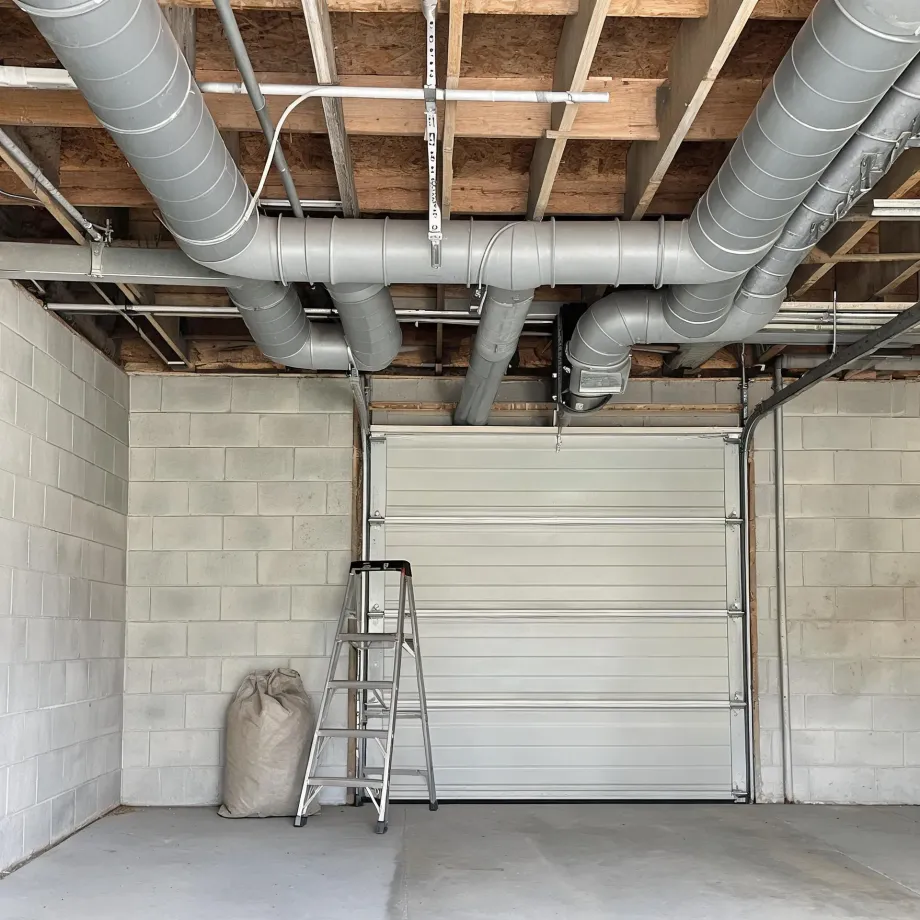
Older ductwork and piping were laid out for equipment with different output profiles, and what a contractor finds behind the walls often does not line up with what a new boiler needs to distribute heat evenly. Half the homes in Hancock County, Georgia were built in 1990 or earlier (2020-2024 ACS 5-year). That age puts the structural decisions of the original build well before modern boiler technology, which means the existing distribution system is the first thing a contractor has to evaluate. If the piping runs and radiator placements do not suit a new unit's output, the install changes scope before the boiler itself is even priced.
What a Boiler Installation Puts in Your Home
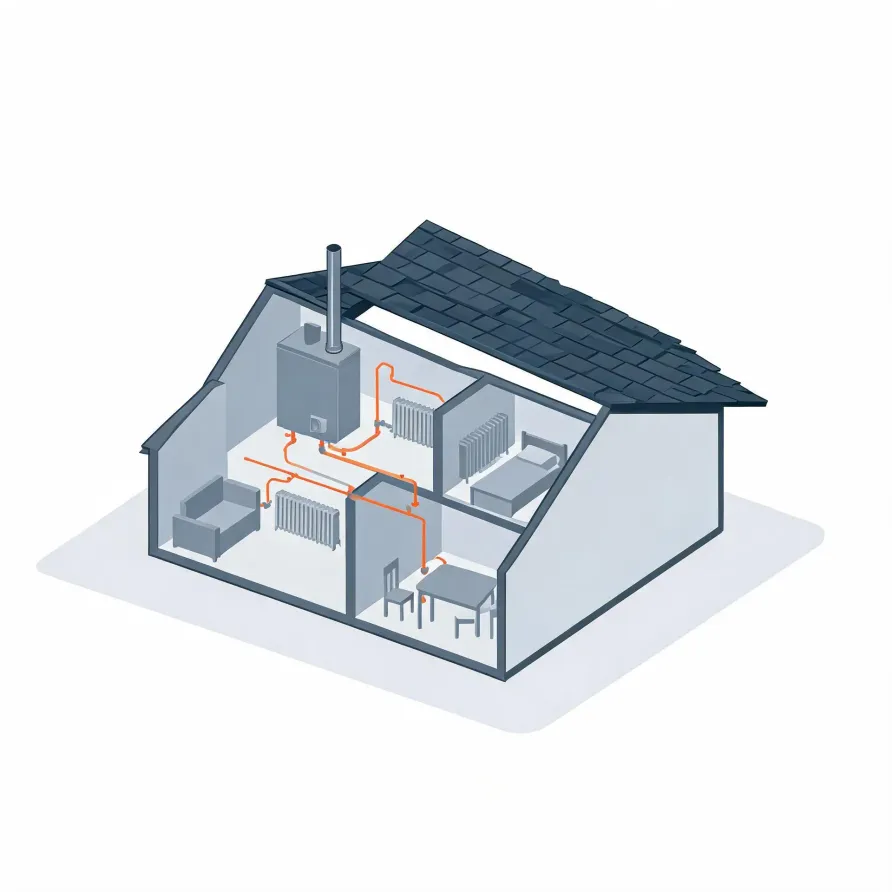
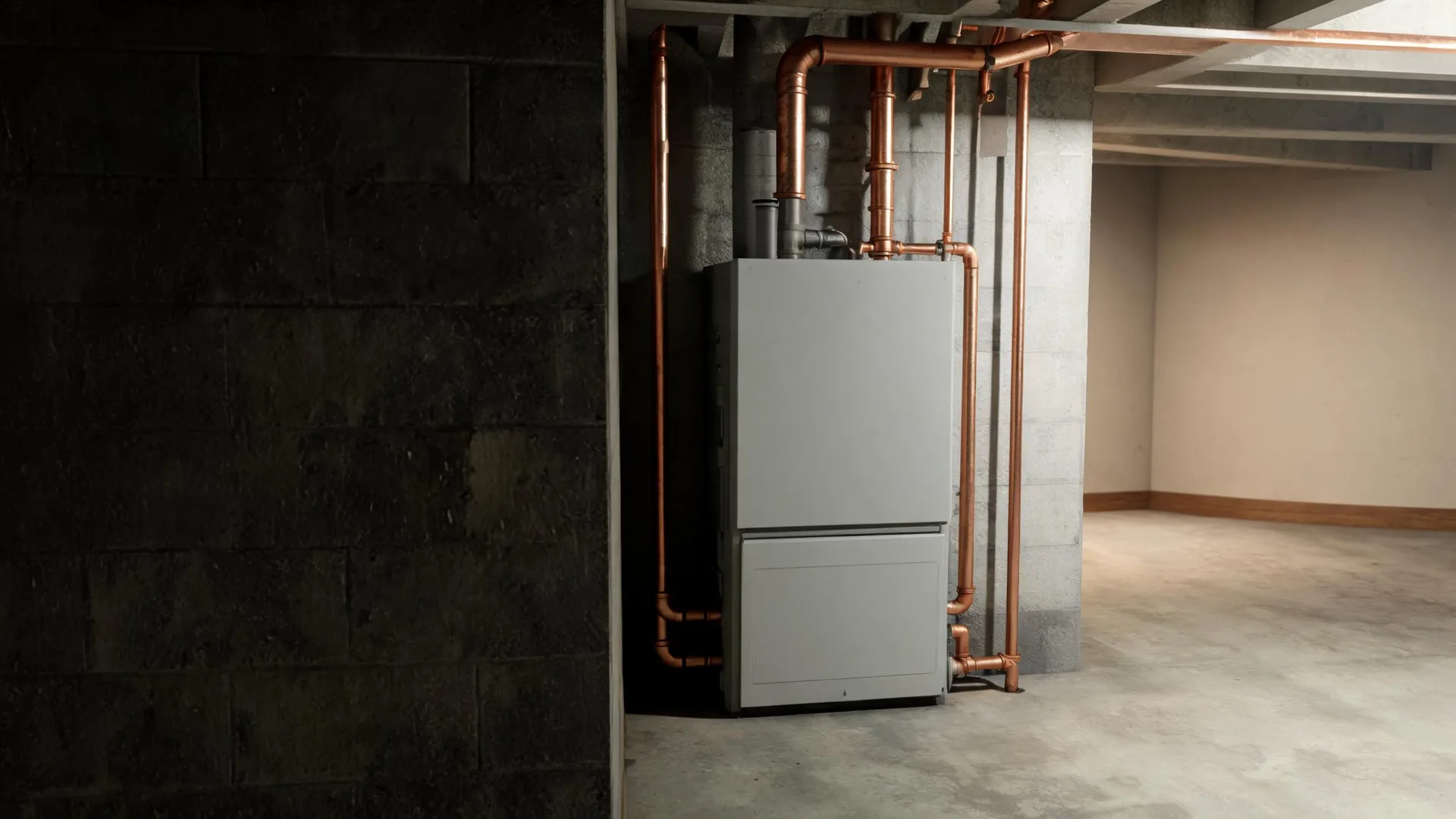
The boiler itself sits in a mechanical room, basement, or utility closet and is the unit that heats the water the system runs on. Paired with it is the expansion tank, which absorbs pressure changes as water heats and cools. Both pieces get set in place before anything else in the system connects.
Radiators or radiant floor loops sit at the points where heat enters each room, and the circulator pump moves heated water from the boiler out to those points and back again. A pressure relief valve and shutoff valves sit close to the boiler itself, giving a contractor access to isolate or protect the system when needed.
The drawing shows a typical layout, and a licensed contractor determines exactly which components apply to this house.
Get matched in Hancock CountyHancock County, Georgia, by the numbers that matter
26 severe weather events were recorded in Hancock County, Georgia between 2015 and 2024.
NOAA National Centers for Environmental Information, Storm Events Database, bulk CSV export, events 2015-01-01 through 2024-12-31.Half the homes in Hancock County, Georgia were built in 1990 or earlier (2020-2024 ACS 5-year).
U.S. Census Bureau, 2020-2024 American Community Survey 5-Year EstimatesHancock County, Georgia holds 4,971 housing units (2020-2024 ACS 5-year).
U.S. Census Bureau, 2020-2024 American Community Survey 5-Year EstimatesOwners occupy 79.3% of the occupied homes in Hancock County, Georgia (2020-2024 ACS 5-year).
U.S. Census Bureau, 2020-2024 American Community Survey 5-Year EstimatesSevere Weather History in Hancock County
Local weather puts real demands on a boiler over its service life. How hard that equipment works, and how often it gets pushed to its limits, is shaped by what the climate does in this part of Georgia.
26 severe weather events, 2015–2024. Source: NOAA National Centers for Environmental Information, Storm Events Database.