Tell us about the job
Takes about a minute. No obligation.

Sizing a boiler for a Fayette County home is a heating-load question first. 87 severe weather events were recorded in Fayette County, Georgia between 2015 and 2024. That puts this county in moderate territory: severe weather is real here but not the overriding pressure on a boiler install. A contractor working the job sets equipment capacity against the house's heat loss, duct or piping layout, and fuel type. The weather record shapes how a system is built to last, but it does not override the load calculations a properly sized boiler depends on.
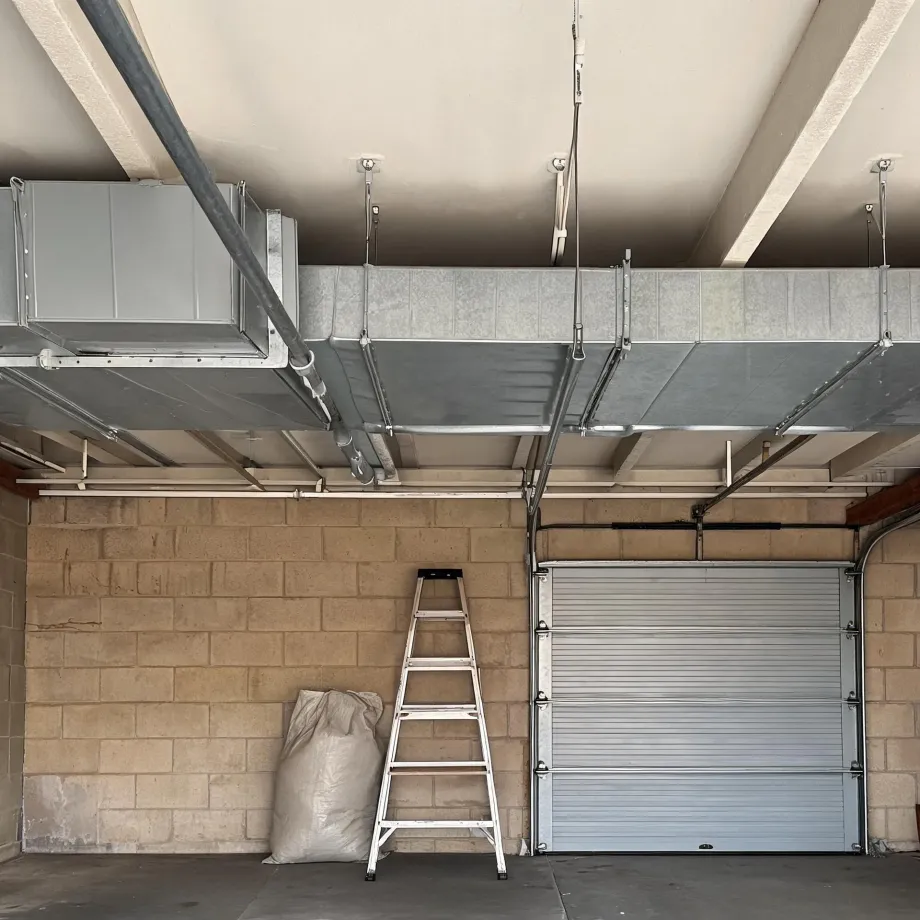
Ductwork laid for one generation of heating equipment carries assumptions about airflow, sizing, and routing that a new boiler does not automatically inherit. Half the homes in Fayette County, Georgia were built in 1993 or earlier (2020-2024 ACS 5-year). That means a contractor assessing a boiler installation here is looking hard at what the existing distribution system can actually handle, before the new unit is ever ordered. If the ductwork conflicts with what the boiler requires, the install scope grows around that gap. The equipment selection comes after that assessment, not before it.
What a Boiler Installation Puts in Your Home
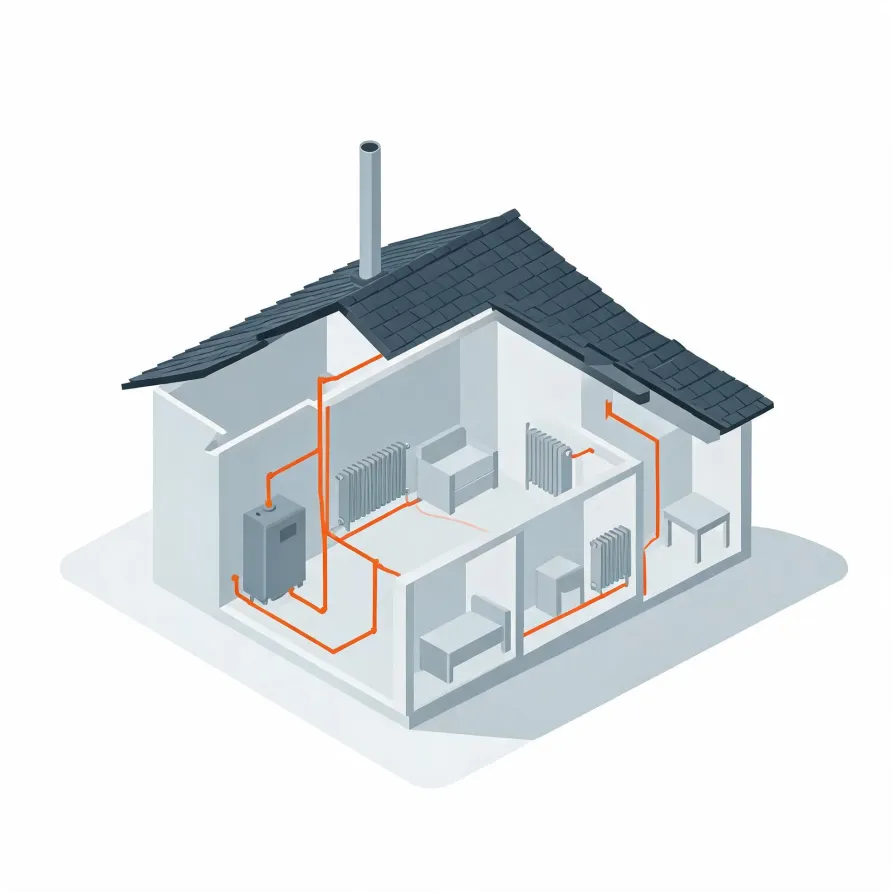
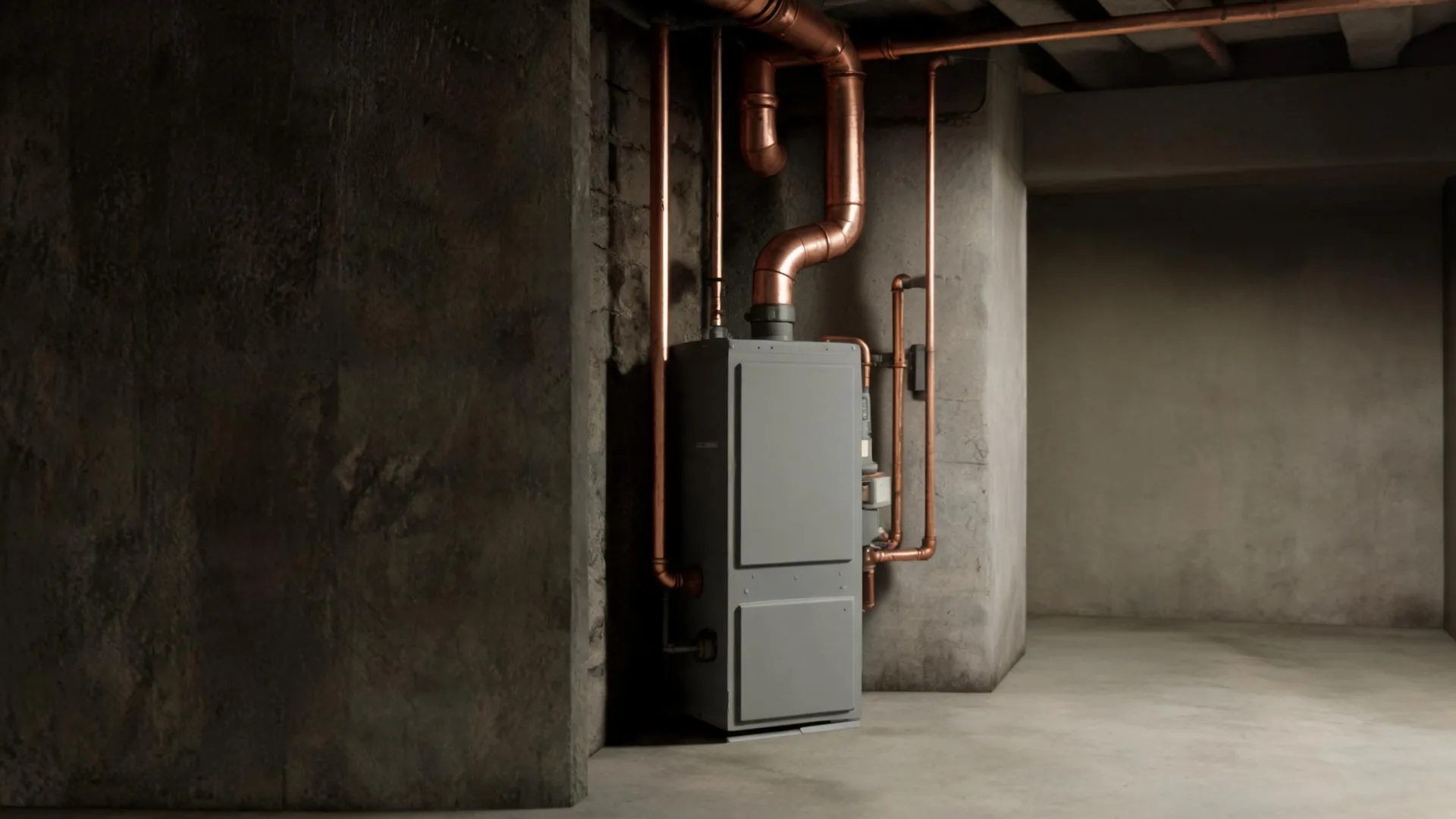
The boiler itself sits in a mechanical room, basement, or utility closet and is the unit that heats water for the whole system. Wall-mounted or floor-standing depending on the house, it connects to a flue or vent that runs to the exterior. Paired with it is the expansion tank, which absorbs pressure as water heats and keeps the system stable.
From the boiler, supply and return piping run through the house to the heat emitters, which are either radiators, baseboard units, or radiant floor loops set into or along the walls of each room. A circulator pump, mounted on the piping near the boiler, moves heated water through those runs. A thermostat or zone controls tie the whole system to the rooms it serves.
The drawing shows a typical layout, and a licensed contractor determines exactly which components and configurations apply to your home.
Get matched in Fayette CountyFayette County, by the numbers
87 severe weather events were recorded in Fayette County, Georgia between 2015 and 2024.
NOAA National Centers for Environmental Information, Storm Events Database, bulk CSV export, events 2015-01-01 through 2024-12-31.Half the homes in Fayette County, Georgia were built in 1993 or earlier (2020-2024 ACS 5-year).
U.S. Census Bureau, 2020-2024 American Community Survey 5-Year EstimatesFayette County, Georgia holds 46,453 housing units (2020-2024 ACS 5-year).
U.S. Census Bureau, 2020-2024 American Community Survey 5-Year EstimatesOwners occupy 80.1% of the occupied homes in Fayette County, Georgia (2020-2024 ACS 5-year).
U.S. Census Bureau, 2020-2024 American Community Survey 5-Year EstimatesSevere Weather Events in Fayette County
Local weather places real demands on heating equipment, and those demands vary by where you are. A boiler sized and installed for Fayette County's climate handles the work it will actually face.
87 severe weather events, 2015–2024. Source: NOAA National Centers for Environmental Information, Storm Events Database.